
Long-acting injectables
PharmaShell® has been developed to create long-acting injectable formulations with tailored depot duration and controlled release. By controlling the composition and thickness of the coating, the release profile can be designed to match the active pharmaceutical ingredient and the intended therapeutic need.
Increased compliance
For long-term treatment, frequent dosing can represent a significant burden. A long-acting injection may replace repeated doses and make treatment easier to manage in everyday life. When fewer dosing occasions need to be remembered, the conditions for adherence to prescribed treatment may improve.
Improved adherence may in turn help maintain the intended therapeutic effect over time. The benefit depends on the medicine, the disease and the clinical profile of the individual product, but reduced dosing frequency may be particularly valuable in chronic conditions associated with a substantial treatment burden.
Reduced costs
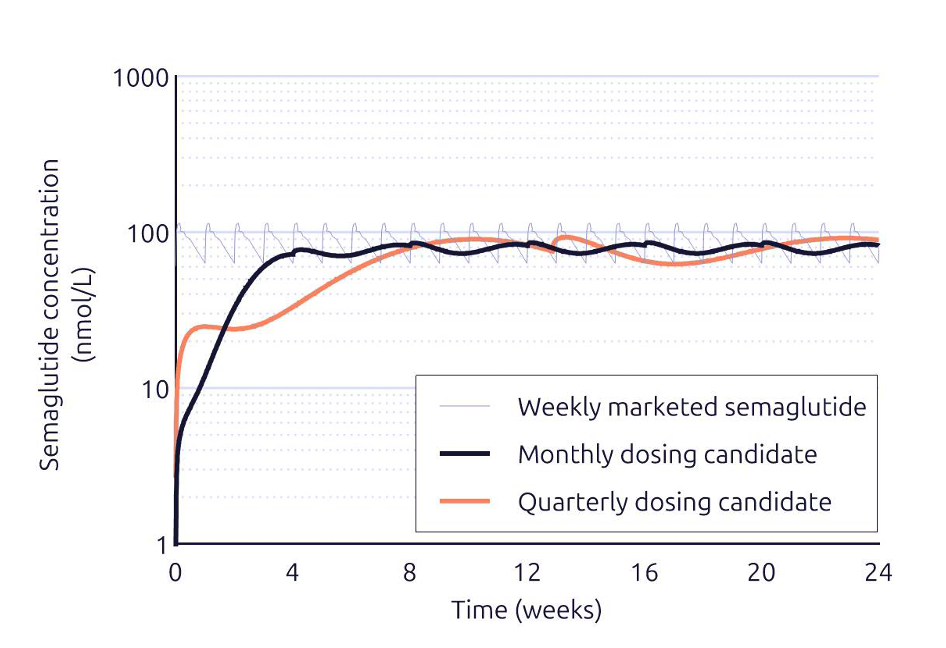
With PharmaShell®, drug release is governed by the gradual dissolution of the coating surrounding each drug particle. The ability to control both the initial release and the release throughout the remainder of the dosing interval may provide more consistent and predictable drug exposure.
More stable exposure with less pronounced peaks and troughs may be particularly relevant for medicines where fluctuations in concentration influence tolerability or treatment performance. Each formulation must therefore be developed and evaluated for its specific active substance and intended use.
Because the PharmaShell® coating is only nanometres thick, the formulation can contain a high proportion of active pharmaceutical ingredient and only a small proportion of coating material. This may make it possible to deliver the intended dose in a low injection volume using a fine needle, contributing to a more patient-friendly administration experience.
Low injection volume is also an important product attribute when a dose intended to last for an extended treatment period must be delivered in a practical injection format. However, the achievable dose, volume and route of administration must be assessed for each individual active substance.
Smarter care
Fewer administration occasions may reduce the need for repeated clinic visits and simplify treatment schedules for patients. At the same time, this may help free up healthcare resources and clinical capacity. The actual benefit and resource savings depend on the specific product and how it is used in clinical practice.
PharmaShell® has been evaluated with substances possessing a wide range of characteristics, including small molecules, peptides, proteins, monoclonal antibodies, oligonucleotides and mRNA. The platform therefore has the potential to enable long-acting formulations across multiple therapeutic areas without requiring modification of the active drug molecule.
Nanexa applies PharmaShell® both in its own development programmes and in collaborations with pharmaceutical companies. Partnerships may begin with formulation development and evaluation of a specific substance and progress towards product or technology licensing opportunities. In this way, the platform’s capabilities can be translated into differentiated pharmaceutical products with the potential to simplify treatment and create value for patients, partners and healthcare providers.

